Karibu wanted to translate its early vision into a fresh, scalable brand system - one able to carry the weight of infusing diverse, community-rooted perspectives into education while still feeling warm, inclusive and dynamic across a growing set of platforms.
Solution
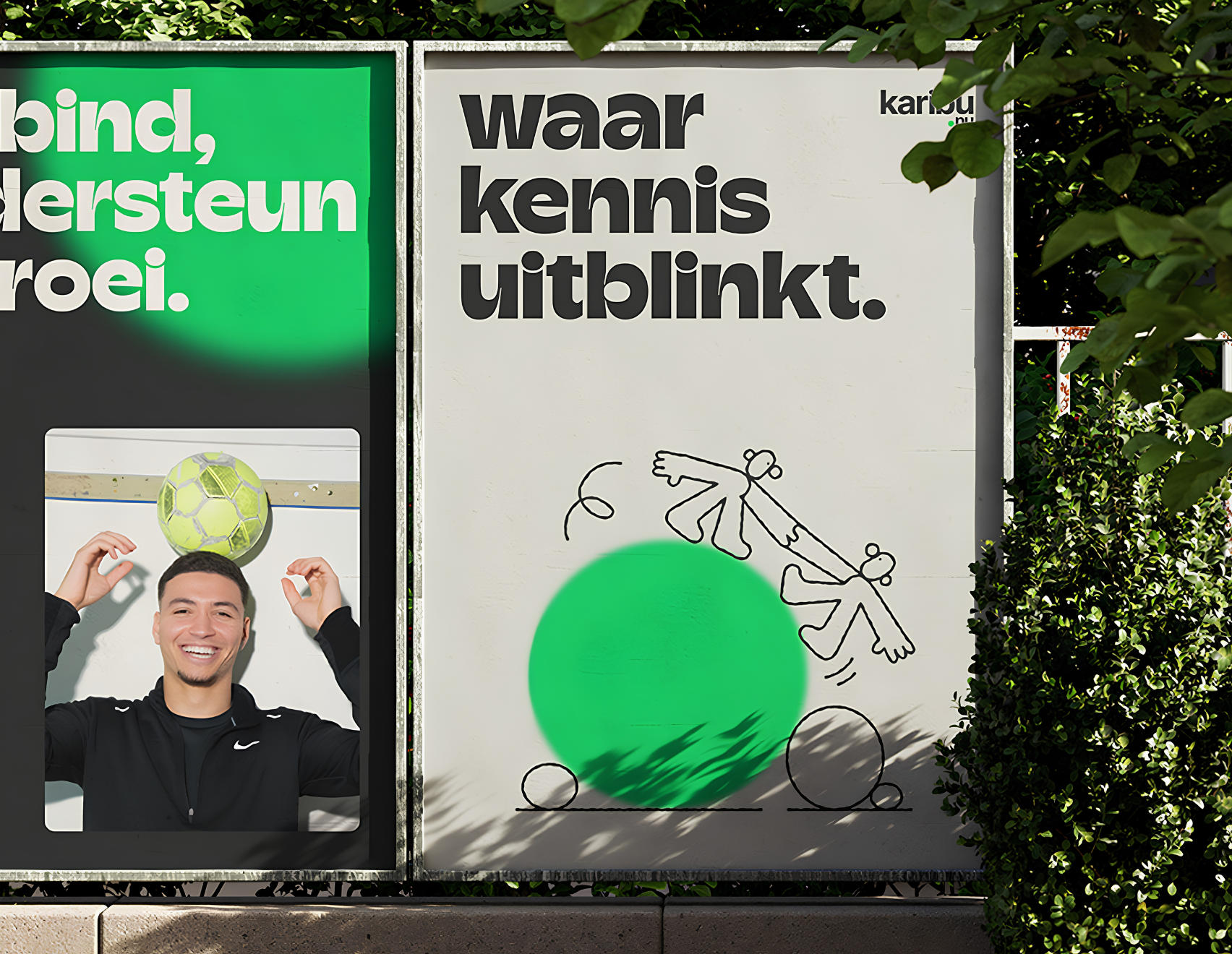
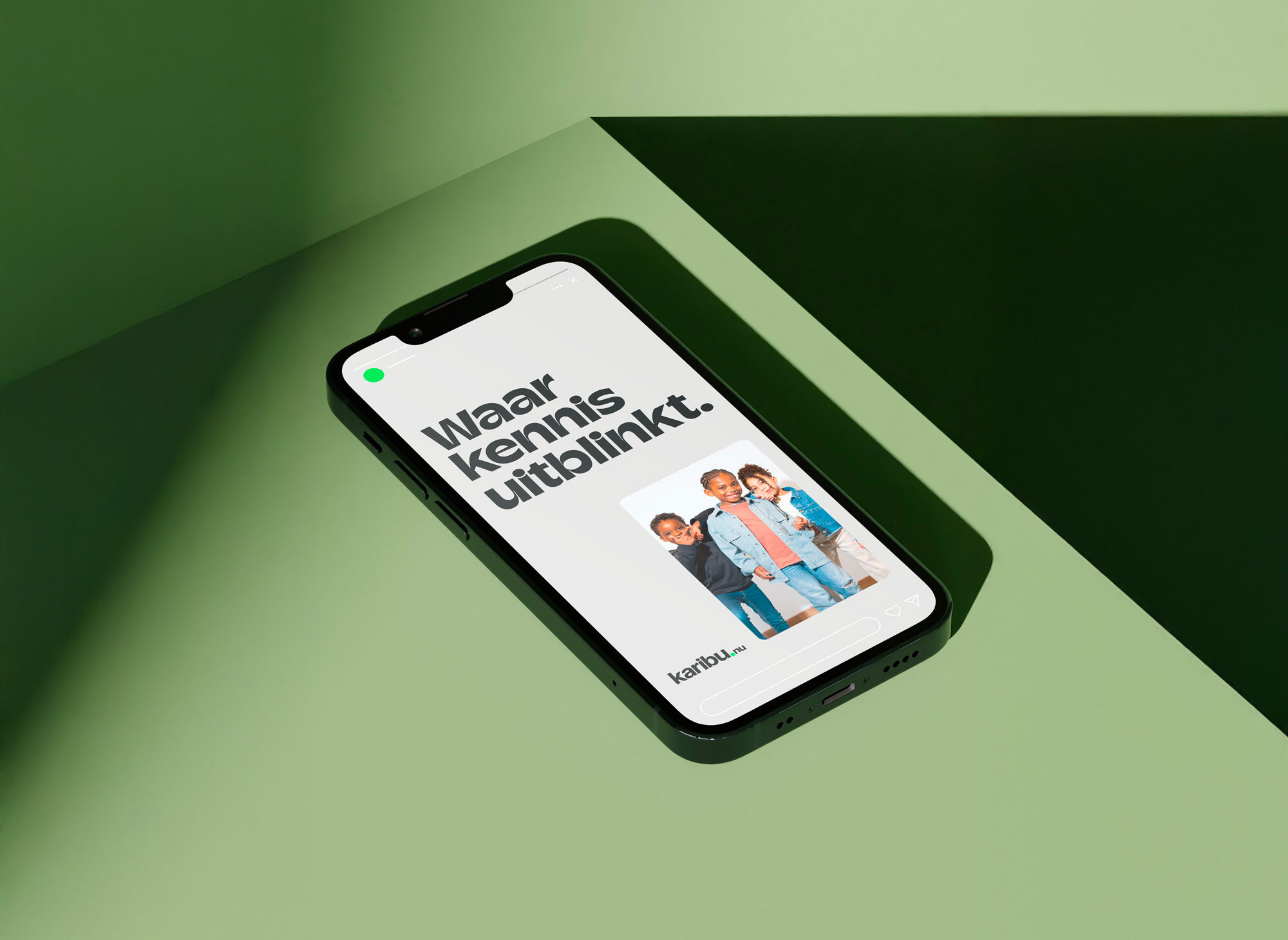
Working alongside Simon Buijs, Head of Design Europe at BUCK, and Lilo Boerman, we built a sophisticated visual system designed to scale with Karibu's growth. At its heart is the 'knowledge orb' - a vibrant, bright green sphere symbolizing growth, knowledge and collaboration, its gradient border shifting with slow, intentional grace as a metaphor for continuous learning. The result is a bold, dynamic identity that feels like a warm invitation - welcoming, just like the name 'Karibu' itself, meaning 'welcome' in Swahili.
(...) Education is never neutral. Every classroom carries the weight of history, the structure of power, and the possibility for transformation.
Credits:
Creative Direction: Simon Buijs (BUCK)
Design & Animation: Studio NelNel
Design: Lilo Boerman
Illustration: Maxim de Gilder
Photography: Quinty Ophelia
Web development: Amisi Kalonda
Project Management: Okra Agency
Karibu is redefining the education landscape by infusing diverse, community-rooted perspectives into schools and childcare centers. By connecting local talent with classrooms, they offer innovative solutions to persistent challenges in education, all while fostering environments of inclusivity and personal growth. Empowering neighborhood role models to inspire the next generation, Karibu is not just alleviating pressure on educators but also paving the way for a more equitable and dynamic education experience for all.
Education is never neutral. Every classroom carries the weight of history, the structure of power, and the possibility for transformation.
Karibu emerges in this tension with a clear vision: to reimagine the Dutch education system through community, representation, and care. At a time when schools and childcare centers are under immense structural pressure, Karibu offers a simple yet impactful response. It connects local role models, cultural practitioners, and community leaders directly to the classroom, not as outside guests, but as integral parts of the learning environment.
This work is more than an operational fix. It is a restructuring of what counts as knowledge, and who gets to teach it.
In the Netherlands, where national education frameworks have often been based on monocultural norms and standardized outcomes, Karibu recognizes the richness of lived experience as pedagogical material. By rooting learning in the realities of students’ neighborhoods, cultures, and languages, Karibu reclaims education as a collective, plural space. Not a one-size-fits-all system, but a living ecology of perspectives.
This approach is also a response to the growing alienation that many young people, especially from diasporic and working-class backgrounds, feel in school. When students never see themselves reflected in the people teaching them, or in the content they’re taught, education becomes a site of erasure. Karibu works against this by building representation into the foundations of daily learning by placing neighbors, artists, and mentors with shared backgrounds into the heart of school life.
In essence, the classroom has the potential to be the most radical space in society. It is one of the few intergenerational, multi-vocal, and continuously recurring public spaces we still have. When approached with intersectional care and intention, it can become a training ground for empathy, critical thought, and civic imagination. It can be where children learn not only facts, but how to see themselves as agents in the world.
By easing pressure on overworked educators, while also broadening the spectrum of who is seen as a “teacher”, Karibu is not just solving problems. It is reshaping the idea of education itself. In doing so, it builds not just stronger schools, but stronger communities. It imagines a future where every child grows up surrounded by people who believe in them and who can show them what’s possible.
In a society grappling with polarization, inequity, and cultural fragmentation, this kind of work is not just educational. It is political. And it is urgent.